This guide turns a craft into a repeatable, action-forward system for goal setting. It shows how a simple collage can grow into a strategic roadmap that cues daily action.
Readers will learn two build paths—physical and digital—so they can pick what fits their space and schedule. The section previews practical tools: intention prompts, layout tips, theme ideas (abundance, love, health, career, home), and a daily activation routine.
Expect a clear outcome: they will finish with a board they actually look at each morning and a small routine that converts images into next steps. The approach blends focused attention, emotional engagement, and consistent action—not wishful thinking.
Key Takeaways
- Follow a repeatable system that turns visual cues into next steps.
- Choose physical or digital methods based on lifestyle and update needs.
- Use intention prompts and layout best practices to make goals feel real.
- Make the board a daily cue: visibility drives behavior change.
- Expect results over months; treat this as strategic, not instant.
Introduction
Start here: a practical roadmap that guides people from clarity to daily practice.
This guide walks readers through three clear phases: clarify what matters, build a displayable plan, and activate it with short monthly check-ins. Each step is small and repeatable so it fits busy routines.
What readers can expect
- Clear prompts to define priorities and select images and words.
- Practical build instructions for physical and digital formats.
- Daily and weekly habits that turn visuals into action.
- Update strategies to reflect progress across a year.
Why vision boards stay popular year after year in the U.S.
They are customizable, motivating, and easy to place where they are seen. A quick glance at a mirror, fridge, or home office can refocus attention in seconds.
That visibility matters because small, daily cues shape choices over time. This practice balances creativity and personal development. It helps people organize their dreams into concrete next steps.
| Benefit | Why it helps | Where to place |
|---|---|---|
| Customizable | Matches personal style and goals | Bedroom, office, phone wallpaper |
| Motivating | Triggers emotion and focus | Mirror, fridge, desk |
| Low time cost | Quick daily glance keeps momentum | Nightstand, screensaver, planner |
How to use this guide
The chapters move from clarity to action. Readers will learn simple journaling prompts, layout tips, and activation habits. Skepticism is normal; this method is a tool for focus, not a promise of instant results.
Choose a format that fits your space and schedule, then commit to small routines. Over months and across a year, progress becomes visible and useful.
What a Vision Board Is and Why It Works
A purpose-driven collage collects pictures, images, and short affirmations that represent a dream or goal. It makes vague hopes feel specific enough to act on.
Vision board, dream board, goal board: the core definition
The terms are interchangeable. A dream board, goal board, and vision board all mean a curated mix of images and words that show a desired reality. They are tools for clarity, not instant results.
How visuals and words act as a roadmap for goals
Images and brief phrases help the brain remember priorities quickly. When each picture links to a measurable goal, the collage becomes both inspiration and direction.
Visualization as a motivation tool (not a magic shortcut)
Repeating a short visual routine can increase focus and opportunity awareness. Still, outcomes come from habits and follow-through, not only looking at a picture.
| Element | What it does | Action tie-in |
|---|---|---|
| Image | Evokes feeling and clarity | Assign one measurable step |
| Word or phrase | Summarizes purpose | Use as a daily cue |
| Picture of outcome | Shows desired reality | Set a deadline and check progress |
Vision Boards Explained Through the Law of Attraction
A simple daily glance can change what people notice and what they choose to pursue. Repeated exposure keeps chosen visions top-of-mind and makes the mind more likely to spot matching opportunities.
How repeated exposure shapes focus and opportunity awareness
Repeated viewing acts like a mental filter. When an image or phrase appears often, the brain flags related events, roles, or listings as relevant.
This is opportunity awareness: they notice options faster because attention is already tuned to similar cues.
Why emotion matters when choosing images and affirmations
Choose visuals and words that spark genuine feeling—excitement, calm, or confidence. Emotion makes a picture compelling enough to prompt follow-through.
“Pick items that create positive momentum, not pressure or comparison.”
Feel + focus + do—feel the response, focus attention with repeated viewing, and take small, concrete steps. This process keeps visualization practical and avoids passive waiting for results.
Note: This approach supports manifestation, but steady action is the key to outcomes.
Setting Intentions Before the Board: Clarity Comes First
Begin by naming what matters most; clarity here shapes every next choice. Start with a short journaling brain dump to list desires, priorities, and why they matter. This simple writing step turns scattered hopes into clear themes.
Using journaling to clarify desires and priorities
Have the writer list three top goals and one sentence explaining each. Ask: is this truly worth regular action? If not, drop it.
Choosing a guiding word for the year
Pick one guiding word—Calm, Open, or Abundant—to set the emotional tone for the year. Use it as a filter when selecting images and phrases.
Deciding the time horizon and alignment check
Choose a time frame: a season, a single year, or a longer span. For each desire, run a quick alignment check in a table.
| Question | Yes / No |
|---|---|
| Will I commit daily or weekly action? | _____ |
| Can I set measurable steps within this time? | _____ |
| Does this fit my top 1–3 priorities? | _____ |
Next step: pick your top one to three items and write one controllable step for each. This ties intention to execution and keeps the creative process practical.
Vision Board Formats: Physical, Digital, and Portable Options
Format matters: pick a setup that fits time, space, and the habit you want.
Classic physical setups
Classic poster board, foam core, or stretched canvas give a polished, finished look. A poster board is low-cost and easy to update, while foam board adds durability. Canvas looks framed and professional in an office or home.
Display-ready choices
Corkboards and whiteboards let someone pin, move, or erase without glue. Fridge magnets are great for kitchens and daily glimpses. These formats work when visibility and flexibility matter.
Portable formats
Vision board books—journals, sketchbooks, binders, and accordion folders—travel well and stay private. They suit people who prefer pencil sketches, magazine clippings, or photos on paper.
Digital options
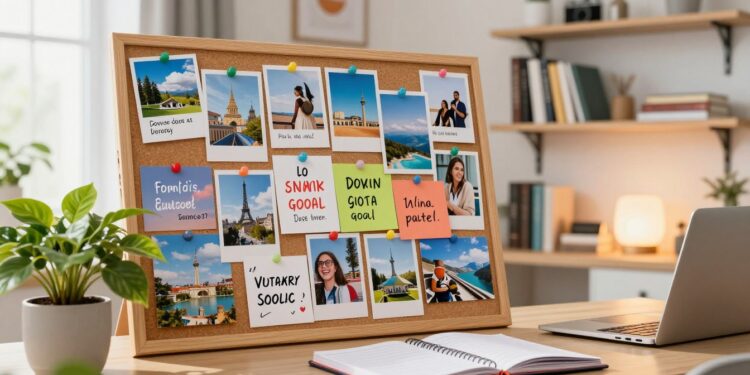
Canva, Google Slides, Pinterest boards, phone wallpapers, and short slideshows or “vision board movies” get seen daily on screens. Many creators print digital designs and frame the poster for a tidy display.
| Format | Best for | Key plus |
|---|---|---|
| Poster board / foam | Visibility | Easy collage updates |
| Cork / whiteboard | Flexible pinning | Rearrange without damage |
| Digital / wallpapers | Daily screens | Instant updates |
Materials and Assets to Gather for a Physical Vision Board
Before glue meets paper, pull together a tidy kit of images and tools. This makes the session focused and keeps decisions small.
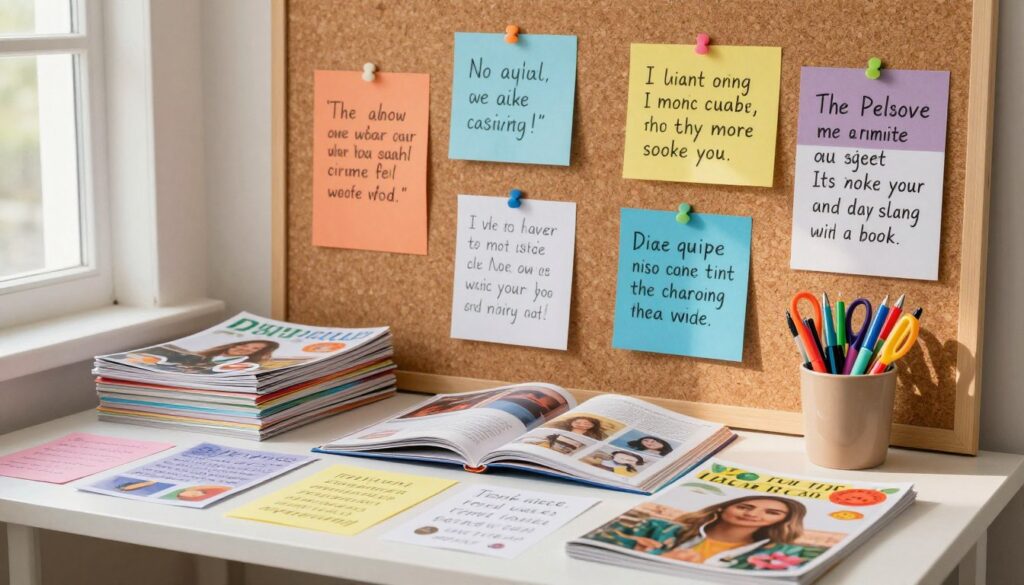
Image sources
Collect magazines, catalogs, postcards, and personal photos. Magazines work well for aspirational pictures and color variety.
Catalogs are great for realistic product shots or home ideas. Postcards add texture and small scenes. Personal photos bring emotional truth and clarity.
Adhesives and basic tools
Packed a supply of glue sticks and double-sided tape for paper clippings. Use pins or thumbtacks for cork or foam boards.
Magnets suit fridges. Hot glue holds heavier items like layered paper or fabric. Foam adhesive squares add depth to highlight priority images.
Creative add-ons
Bring markers, stickers, stencils, ribbons, and textured paper for dimension. Keep extras minimal so the collage stays meaningful, not cluttered.
| Item | When to use | Why it helps |
|---|---|---|
| Magazines & catalogs | Quick, varied images | Speed up selection |
| Personal photos | Emotional, real-life goals | Boosts daily connection |
| Glue, tape, pins | Depends on board type | Secures items for longevity |
| Markers & textures | Final touches | Adds clarity and focus |
How to Make Vision Board Manifestation Happen With a Step-by-Step Process
A practical routine makes a creative collage into a working plan for change.
Choose five categories—career, health, relationships, home, travel—and limit to one to three goals per category. This keeps the board focused and useful.
Collect the right images and words
Pick photos and short phrases that feel like the desired reality. Prioritize emotional resonance over perfection.
Add affirmations and match them to action
Write present-tense lines that describe identity and habit, not only outcomes. Pair each phrase with one small next step.
Design and prioritize
Start with a centerpiece image, then group by sections in a loose grid. Use whitespace so attention lands on what matters.
Secure and place
Pin items on cork, glue on poster board, or use magnets for the fridge. Place the most important goal at eye level.
| Step | Format | Placement |
|---|---|---|
| Assemble categories | Grid / sections | Office wall |
| Collect images & words | Photos, clippings | Mirror |
| Affirm + action | Printed cards | Nightstand |
Seen daily—a quick glance each day reinforces priorities and turns attention into consistent action.
Digital Vision Board Manifestation: How to Build a Board That Gets Seen Daily
A screen-based plan keeps daily cues active on phones and laptops without extra effort. This path suits people who live on devices and want constant exposure to goals.
Create in Canva or Google Slides: set a canvas that uses editable layers so images and photos can be swapped quickly. Use templates or start blank and place a centerpiece image, short phrase, and 3–6 supporting visuals. Save the file so updates don’t require rebuilding.
Create wallpaper and screensavers that play all day
Export designs at common sizes for phone wallpaper and desktop background. For screensavers, export a short slideshow of slides and set it to loop. This keeps the design in view during work or downtime at home and in the office.
Upgrade: short “vision board movies”
Turn slides into a 20–40 second clip with gentle music and brief text. Play it each morning or set it as a looping screensaver. Vision board movies deepen emotional resonance and make the images feel more real.
Print a hybrid display
Export a high-resolution file and print a framed copy for a wall in the office or home. This hybrid step adds tactile presence while the editable digital original stays current.
- Tip: mix personal photos with curated images to make goals specific and believable.
- Monthly habit: schedule a 15-minute refresh to swap completed items or update priorities.
“Keep the board where it will be seen—screens do that best for people who live online.”
Vision Board Examples and Theme Ideas That Spark Action
Practical examples help translate loose hopes into visuals that drive action. Below are theme ideas and image suggestions readers can copy or adapt to their own plans.
Abundance
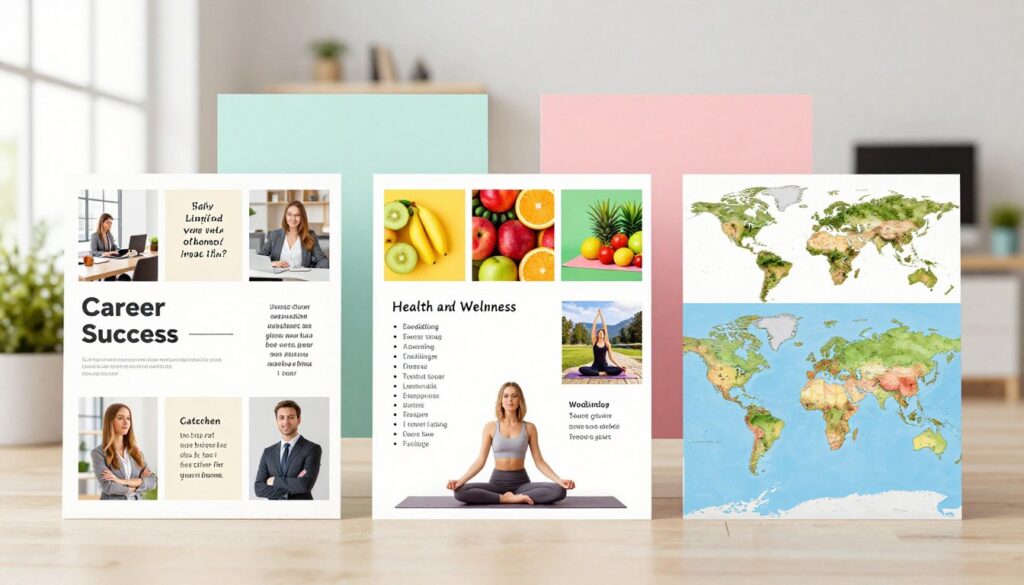
Use images of savings trackers, debt-free dates, a preferred home style, and business growth charts. Add photos of a bank app goal or a client list to make monetary goals feel reachable.
Love and Family
Choose photos that promote healthy relationships, self-care rituals, and group moments with family. Include community events or volunteer scenes to widen connection beyond romance.
Health
Pick visuals tied to routines: sleep, meal prep, workouts, and mindfulness spaces. Add milestone cues like a race bib or a medical date to track progress toward specific health goals.
Career
Display a dream office, certification logos, awards, and images of completed creative projects. For business or job-seekers, show logos of target companies and short success metrics.
Home & Lifestyle
Collect photos of your ideal living space, hobby setups, and travel snapshots. These images make daily life align with larger lifestyle aims and keep everyday choices consistent with long-term dreams.
Single-Focus vs Whole-Life
Single-focus boards work well for one clear project—like a book, a new business, or a fitness goal. They sharpen attention on the next steps.
Whole-life vision boards combine categories so someone can balance career, home, and relationships. Choose this when the aim is steady, broad progress rather than a single outcome.
| Type | Best for | When to use |
|---|---|---|
| Single-focus | Specific project or goal | When deadlines and actions are clear |
| Whole-life | Balanced well-being | When juggling multiple priorities |
| Hybrid | One main goal + supporting categories | When a big goal affects daily life |
Activating the Board: Daily Use Habits That Support Manifestation
Use three quick steps to move from looking to doing every single day. A short intro routine makes the collage a functional cue, not just decoration.
Look, imagine, and feel
Each morning, spend 30–60 seconds on a top image. Look at the scene, imagine the detail, and feel the emotional why. This links intention to motivation and keeps the image meaningful.
Pair visualization with action
Turn each picture into one clear next step. For example: a travel photo = book a ticket; a workout image = schedule a 30‑minute session. This small action anchors visualization in the real world.
Gratitude and trust practices
End the mini routine with a short gratitude line, such as “thank you for this or something better.” Trust and thanks lower pressure and keep momentum steady.
How often to revisit
Do a daily glance for reinforcement and a weekly 15‑minute check to pick the next seven actions. This simple process keeps visions present in daily life and supports steady follow-through.
“Consistent, small habits turn visuals into measurable progress.”
Updating and Evolving the Vision Board Over Time
Regular updates keep a display aligned with real priorities instead of frozen intentions. As clarity increases, images and phrases should change to match new specificity and next steps.
Refreshing images as goals change
Every few months, remove pictures that no longer reflect current aims. Replace them with sharper images and more precise affirmations.
Simple refresh process: review each item, ask if it still motivates action, swap or rewrite with one measurable step.
Celebrating wins with a victory space
Create a dedicated “victory” area or scrapbook for completed goals. Moving finished items into that space reinforces success and builds momentum.
Seeing past wins makes progress concrete and keeps motivation high across time.
Seasonal and annual rebuilds
Many creators make new displays one to two times per year. A seasonal tweak keeps images emotionally alive and aligned with shifting priorities.
Suggest a 15‑ to 30‑minute review each season and a fuller rebuild once a year to track patterns and wins across years.
- Remove outdated images and replace with clearer visuals.
- Rewrite vague phrases into present-tense, specific actions.
- Move achieved items to your victory space to celebrate progress.
| Cadence | What to do | Why it helps |
|---|---|---|
| Seasonal (4x year) | Quick swap and clarity check | Keeps content fresh and motivating |
| Annual | Full rebuild and reflection | Reveals growth over years |
| Victory archive | Store completed items | Reinforces success and learning |
“Reviewing past displays after a year or a few years shows patterns and wins that felt invisible in the moment.”
Mistakes to Avoid With Vision Boards
Many boards fail because they try to do too much at once. That makes a display pretty but ineffective. The real aim is to turn visuals into daily cues and clear next steps.
Making it cluttered or vague
Problem: Too many images and fuzzy goals dilute focus.
Fix: Limit the board to three clear goals and one strong image per goal. Pair each image with one specific action to do this week.
Choosing visuals to impress others
When images reflect status or trends, motivation fades fast. The collage must mirror personal desire, not other people’s expectations.
Pick photos that spark real feeling and link them to simple tasks that build the intended reality.
Hiding the display so it’s rarely seen
“Out of sight, out of mind” is real. Visibility matters more than aesthetics.
Solutions: move the board to eye level, set a saved design as phone wallpaper, or place it near a daily routine area.
Expecting results without habits and follow-through
Looking at a picture is not enough. Results come from repeated action.
Turn each goal into a weekly plan with two small tasks. Review progress every Sunday and adjust steps for the coming week.
Overexplaining to unsupportive people
Sharing everything can drain momentum. Creators often advise: do NOT explain the process to those who dismiss it.
“Share goals with trusted allies who add accountability, not critique.”
| Common Mistake | Why it fails | Quick Fix |
|---|---|---|
| Clutter and vagueness | Reduces focus and weakens memory cues | Limit to 3 goals; add one weekly action |
| Impressing others | Creates short-lived motivation | Choose authentic images and reasons |
| Hidden display | Reduces daily exposure | Move to eye level or use wallpaper |
| No habits | Visualization without action stalls progress | Schedule two weekly tasks per goal |
| Over-sharing | Can invite doubt and distraction | Share with trusted supporters only |
Success Stories: What People Have Manifested With Vision Boards
Real-life results show how steady focus and small actions add up over months. Below are brief, believable examples that link images to specific next steps and measurable wins.
Real examples that became success stories
A woman who added dream home images and a monthly savings target found a house she loved a year later. A writer who placed books and writing tools on a vision kept a weekly draft habit and published a first book within two years.
Others report big life changes: a relocation from Boston to North Carolina after mapping job searches, building a trusted business team by posting hire and networking goals, and booking beach travel after saving with a target image.
Why results often become obvious over months or years
Small choices stack. Each decision—an application sent, a networking call, a saved dollar—adds up. When someone reviews their images after a year or a few years, progress is clear because tiny actions compounded into change.
Accountability, parties, and coaching
Group “board dates” and vision parties create friendly pressure and fresh ideas. Shared accountability keeps people honest about weekly steps without shame.
A coach can help turn images into milestones and weekly habits, especially for complex career or business goals. This combination of community and strategy increases the chance of long-term success.
“Seeing small wins over time makes life changes feel earned and repeatable.”
Conclusion
This final recap turns the steps in this guide into a short, doable plan for the next hour. Set intentions, pick a format you will see every day, and build with images and words that spark real feeling.
, Pair each image with one small, measurable action and place the board at eye level or set it as phone wallpaper. Take a photo of any poster or paper display so it travels with you.
Start today: choose one guiding word, list three priority goals, and create a mini display on paper or a quick digital file in under an hour. Trust timing, keep habits, and update the display over time.
When they link visions to steady action, vision board manifestation becomes a practical way to manifest life. Keep using the display—those who revisit it make the most progress.