


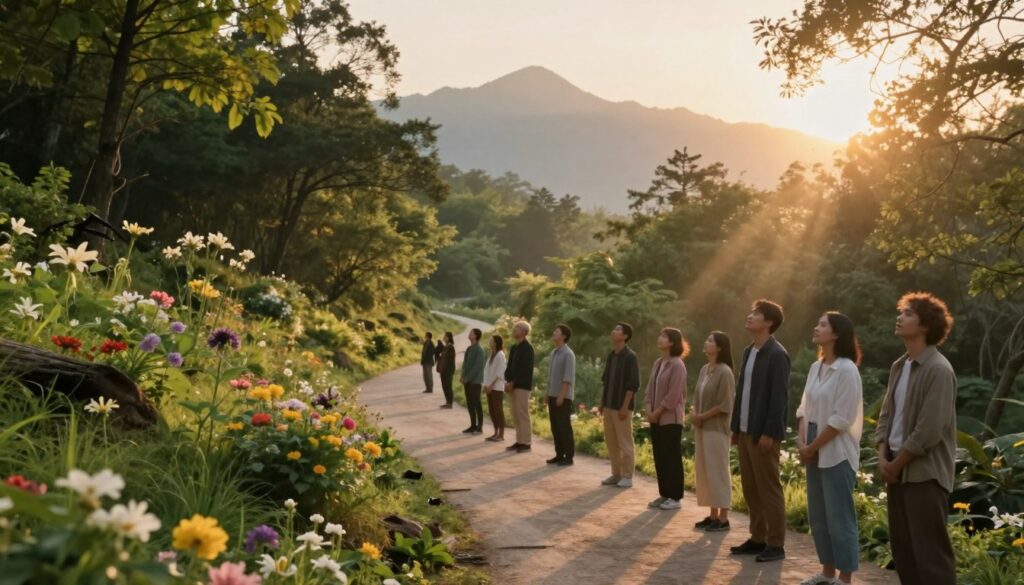
“The greatest discovery of any generation is that a human being can alter his life by altering his attitudes of mind.” — William James
This guide frames change as a practical journey, not a performance. It explains why inner shifts matter more than busier schedules. When someone shifts their mindset, steady habits rise and visible fruit appears over time.
The article maps a clear, step-by-step path: why mindset matters, the ten key shifts, and tools to implement them—journaling, affirmations, reflection loops, and daily exercises. It also hints at how to recover from drift and resistance with truth and grace working together.
Written for people juggling busy American life, the guide stays grounded and doable. It points to pillar resources like Spiritual Growth 101, Spiritual Disciplines Guide, and How to Build a Daily Prayer Rhythm for deeper study.
Key Takeaways
- Mindset shifts often trigger faster, lasting change than effort alone.
- The guide offers ten practical shifts and daily tools to apply them.
- Journaling, affirmations, and reflection loops make intention into habit.
- Expect a process; combine truth and grace to stay steady over time.
- Includes recovery steps for resistance and drift in everyday life.
Introduction: A Spiritual Journey Built One Thought at a Time
True change starts at the level of thought, where new beliefs slowly reshape daily choices. This guide views spiritual growth as a steady, practical process. It is about small mind shifts that make habits stick over time.
Grace + truth + time models maturity. Scripture urges believers to “grow in the grace and knowledge” (2 Peter 3:18). The Bible equips and guides (2 Timothy 3:16-17), and God continues His work (Philippians 1:6).
The hidden battleground is the thought-life. What someone repeatedly tells themselves about God, self, and others becomes their default way in the world. Beliefs shape choices; choices shape character.
Why mindset comes before habits
Focusing on mindset prevents the common loop of starting habits and quitting when motivation drops. This how-to approach begins with thinking, then adds prompts, reflection, and daily exercises to make change sustainable.
- Practical: Tools follow thought changes.
- Patient: Time is part of the plan, not the enemy.
- Balanced: Truth in Scripture and grace work together.
| Element | What it does | Everyday sign |
|---|---|---|
| Grace | Offers patience and forgiveness | Less guilt after setbacks |
| Truth | Shapes beliefs via Scripture | Choices align with values |
| Time | Allows steady maturity | Small, lasting changes over months |
Suggested next reading: What Is Spiritual Growth?, Grace and Growth, and How to Study the Bible for Beginners. This guide will walk the reader, step by practical step, through the rest of the process.
Why Mindset Drives Spiritual Growth (Not Just More Effort)
A changed mind reorients habits; effort follows meaning, not the other way around.

From “osmosis” to intentionality: how community and disciplines shape beliefs
Time spent in healthy community and regular church life reshapes what feels normal. Habits and beliefs rub off when people gather, serve, and worship together.
Disciplines like prayer, Scripture reading, and service turn intention into wiring for the mind. These practices are tools for rewiring thoughts, not boxes to check.
Setting the mind “on things above”: aligning thought-life with values and faith
What someone keeps in view becomes their likely path. To “set the mind on things above” means to hold wisdom and hope in attention until it guides choices.
How trials can mature a person when the mindset is resilient and trusting
Hard seasons are one of the kinds of experiences that shape perseverance. When they adopt a trusting, resilient outlook, trials produce maturity instead of fear.
“If they speak the truth in love, they will grow up in every way into him who is the head.” — Ephesians 4:15-16
Bridge: If mindset drives spiritual growth, inner renewal is the starting line. The next section shows how to prepare the soil through truth, prayer, and steady practices.
Personal Spiritual Growth Starts With Inner Renewal
A fresh inner life lays the foundation for any lasting change in how someone thinks and acts.
Good soil, deep roots: creating conditions where growth can actually happen
Growth is not forced; it is cultivated. The “good soil” image shows that removing what hardens the heart matters as much as adding nourishment.
Good soil looks like honest self-awareness, fewer numbing distractions, and quiet margins where Scripture can land and be understood.
Truth in the Word, power in prayer: inputs that reshape perspective
Truth from Scripture corrects distortions and trains the mind toward wisdom. Regular reading and reflection reframe daily choices.
Prayer is more than requests; it calms the nervous system and realigns desires so change feels doable.
The Holy Spirit’s role in lasting change and the fruit that follows
The Holy Spirit begins and sustains the work that will last. Willpower may start movement, but Spirit-led change brings real fruit—love, joy, peace, patience, kindness, and self-control.
| Condition | What it looks like | Everyday sign |
|---|---|---|
| Good soil | Space for Scripture and reflection | Calmer responses under stress |
| Truth input | Scripture study and meditation | Better choices align with values |
| Spirit-led work | Dependence on the Holy Spirit | Visible fruit over weeks and months |
Suggested reads: How to Meditate on Scripture; What Is the Fruit of the Spirit?; Who Is the Holy Spirit?
Mindset Shifts Spiritual Growth Depends On
These ten mindset shifts form the practical center of change. They change what feels normal in daily life and make steady transformation possible.

Lack → Abundance
Notice provision: practice gratitude and release scarcity thinking that fuels anxiety.
Ego → Soul
Choose humility over performance so identity rests deeper than wins or streaks.
Fear → Trust
Let go of tight control. For example, plan less in anxious seasons to practice dependence.
Shame → Forgiveness
Confession and cleansing restore tenderness and courage to try again.
Isolation → Community
They grow better together; honest friendships form accountability and support from others.
Busy → Present
Decide to spend time with God and people with full attention; presence matters more than tasks.
Knowledge-only → Obedience
Learning becomes useful when it shows up in speech, choices, and daily acts.
Comparison → Calling
Measure success by faithfulness and fruit, not by how others appear to be doing.
Short-term → Lifelong Process
Accept slow seasons. Long-term maturity needs time and steady steps.
Self-reliance → Spirit-led
Move from willpower to inner guidance and responsiveness to the Spirit for lasting change.
How to Implement Each Shift With Journaling, Affirmations, and Reflection
Small, repeatable practices are the bridge between insight and lasting change. Use short tools that fit busy days so new patterns can emerge without pressure.
Journaling prompts that reveal patterns
Start each session with three quick lines: what they believe about God, what they fear will happen, and what they avoid when exposed. Add a prompt tied to a shift—fear → trust, shame → forgiveness, busy → present.
Affirmations grounded in truth
Choose short statements rooted in Scripture (2 Timothy 3:16-17) and reality. Replace distorted self-talk with aligned words to repeat in hard times. Example word: TRUST.
Reflection loops: weekly reviews
Do a 15-minute weekly review: note progress, name one growth edge, and pick one practical next step. Use Psalm 119:59 as a model for checking and turning toward truth.
Word-of-the-year practice
Pray for a guiding word, study it in Scripture, and notice it in daily life. Run 90-day reviews to adjust the work and keep momentum across times in the journey.
- Simple method: identify the old thought, replace it with truth, and practice the new response in real situations.
Daily Exercises for a Personal Growth Mindset That Sticks
A simple daily rhythm trains the mind to choose trust, kindness, and steadiness in ordinary moments.

Morning: set an intention, meditate on Scripture, and pray
Spend 5–10 minutes each morning naming one intention (for example, trust over fear), read a short verse like Psalm 1:1-3, and breathe through a two-line prayer that asks for mercy and focus.
Mercies are new every morning—use that truth to begin decisions from calm rather than rush.
Midday: a one-minute reset
At lunch or a break, pause for 60 seconds. Breathe, release control, and choose a kindly word to use with people for the afternoon.
This tiny reset reroutes stress to peace and trains the body to respond, not react.
Evening: examen-style reflection, confession, and gratitude
Take 5–10 minutes to review the day. Note where love showed up, where fear led, and what needs confession.
End by naming three things to be thankful for to shift from lack to abundance and to help them grow spiritually over time.
Weekly: fellowship, service, and worship
Anchor one weekly practice: meet with community, serve someone, or attend worship. Fellowship reinforces change by osmosis and builds the whole body in love (Ephesians 4:15-16).
Combine the week’s notes with a short journal entry and one practical next step for the coming days.
- Simple rule: choose repetition, not intensity.
- Pillar links to read next: Daily Prayer Routine; How to Practice the Examen; Finding a Healthy Church Community.
Overcoming Resistance, Relapse, and Spiritual Drift
Resistance often arrives quietly—through restless thoughts, low energy, or the urge to scroll instead of pray.
These signs are normal, not disqualifying. Anxiety, numbness, and distraction often mean someone is avoiding pain, truth, or surrender. They are common ways the heart protects itself, not proof of failure.
When resistance shows up as anxiety, numbness, or distraction
Unconfessed sin can increase pressure and despair. Small compromises and unmanaged temptation grow quietly until peace and relationships suffer.
Jesus taught that defilement comes from within (Mark 7:20-23). That means the way forward must include honest inner work, not just fixing the world around them.
Getting back on course: confession, grace, and practical next steps
The simplest recovery plan works in four steps:
- Confess honestly—name the sin and ask for cleansing (1 John 1:8-10).
- Receive grace—accept forgiveness and stop pretending it never happened.
- Remove one trigger—take away the nearest obvious lure that led them astray.
- Take one next step within 24 hours—a call, a short prayer, or a return to a discipline.
How to know they’re growing: visible fruit, deeper hunger, and wise feedback
Growth shows up slowly. Look for steadier kindness, more consistent patience, and a deeper hunger for God over time.
Trusted people in the body can give wise feedback, and trials often mature someone (James 1:2-4). These signs carry more weight than fleeting success or failure.
| Issue | Immediate action | Marker of real change |
|---|---|---|
| Anxiety or numbness | Confess, breathe, short prayer | Calmer responses under stress |
| Quiet compromises | Identify trigger, remove it | Fewer repeated slips over weeks |
| Isolation from people | Reach out to a trusted friend or group | Regular honest conversations and accountability |
“If we confess our sins, he is faithful and just to forgive us and to cleanse us from all unrighteousness.” — 1 John 1:9
Next reads: Confession and Forgiveness; Dealing With Temptation; Signs of Spiritual Maturity.
Conclusion
When someone lines up thought, action, and fellowship, new ways become normal.
Spiritual growth is a long journey that takes time, patient steps, and steady practice. Lasting change happens when mindset shifts are paired with small daily rhythms and honest partners who offer love and wise feedback.
Choose one shift to focus on for the next few weeks. Name the old way to replace and pick a guiding word like TRUST as an example. Then try this simple plan:
One short morning practice, a one-minute midday reset, an evening reflection, and one weekly touchpoint with others.
Connect with the pillar guides: Mindset and Faith, Bible Reading Plans, Prayer Guide, Spiritual Disciplines, and Community & Fellowship. Take the next step—small, steady, together—and watch real growth unfold over time.